01
Select the patient
Review symptoms, imaging, cartilage defects and joint mechanics before choosing an injection pathway.
Explore non-surgical, ultrasound-guided ChondroFiller injection with Professor Paul Lee, who pioneered its use as a non-surgical injection within his cartilage-preservation practice.
For qualified healthcare professionals · London, UK

 ICRS Teaching CentreLondon Cartilage Clinic
 Centre of ExcellenceEducation network
Clinical knowledge, shared
Explore Professor Lee’s non-surgical ChondroFiller approach, connecting cartilage assessment, the collagen scaffold and image-guided planning.
Discuss cases
Explore technique
Plan follow-up
The team confirms the practical format and group arrangements for your session.
From assessment to follow-up
From identifying the right cartilage problem to planning a precise injection and follow-up.
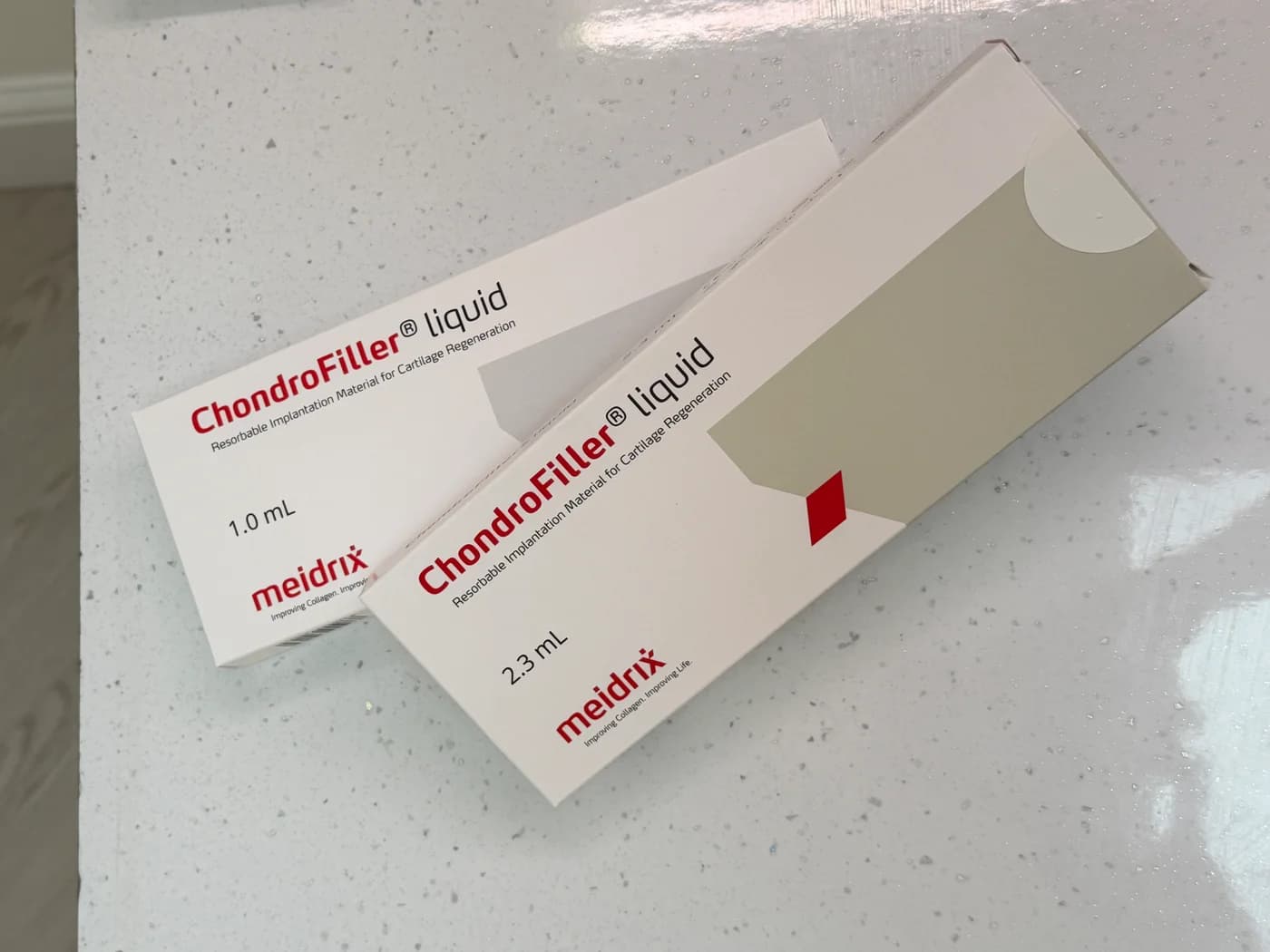
Review symptoms, imaging, cartilage defects and joint mechanics before choosing an injection pathway.
Discuss the collagen scaffold, preparation and handling, and the distinction between injection and arthroscopic applications.
Explore ultrasound-guided planning, anatomical landmarks and injection technique through clinical teaching.
Discuss loading, rehabilitation, review and how to explain the evidence and expected outcomes to patients.
Course guide · Professional development
This ChondroFiller training course is for clinicians developing a cartilage-preservation service, as well as experienced injectors exploring liquid collagen treatment. The focus is the complete clinical pathway: recognising the cartilage problem, understanding the proposed treatment, planning image-guided delivery and reviewing the patient afterwards. Training with Professor Lee gives clinicians a setting to examine the reasoning behind his approach and relate it to their own practice.
Professor Lee’s ChondroFiller teaching starts with the clinical problem: how to preserve a joint while making a realistic assessment of the available options. His experience across cartilage-preservation techniques gives the injection discussion a wider context than product handling alone.
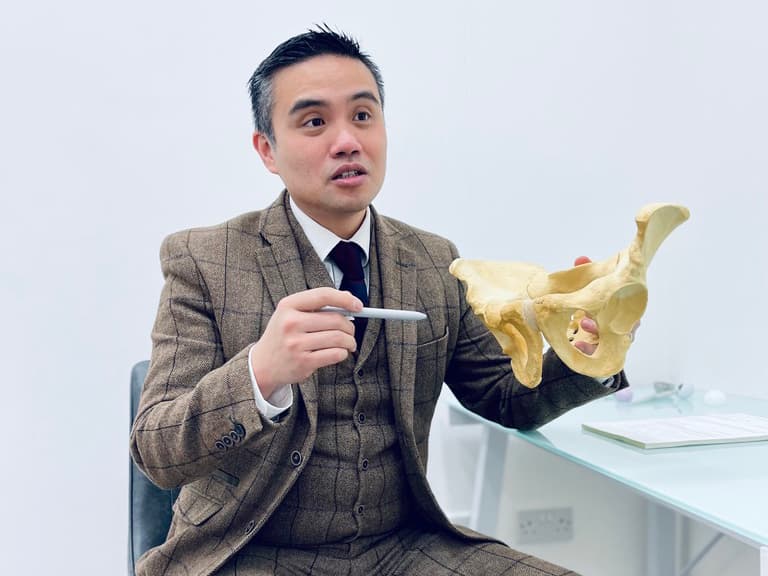
A cartilage finding on MRI does not answer every question. Bring questions about the relationship between symptoms, imaging, function and the patient’s goals, and how those features influence a preservation strategy.
Case-based discussion
Cartilage. Scaffold. Clinical context.
Understand the cartilage problem
Explore the collagen scaffold
Connect rationale with the evidence
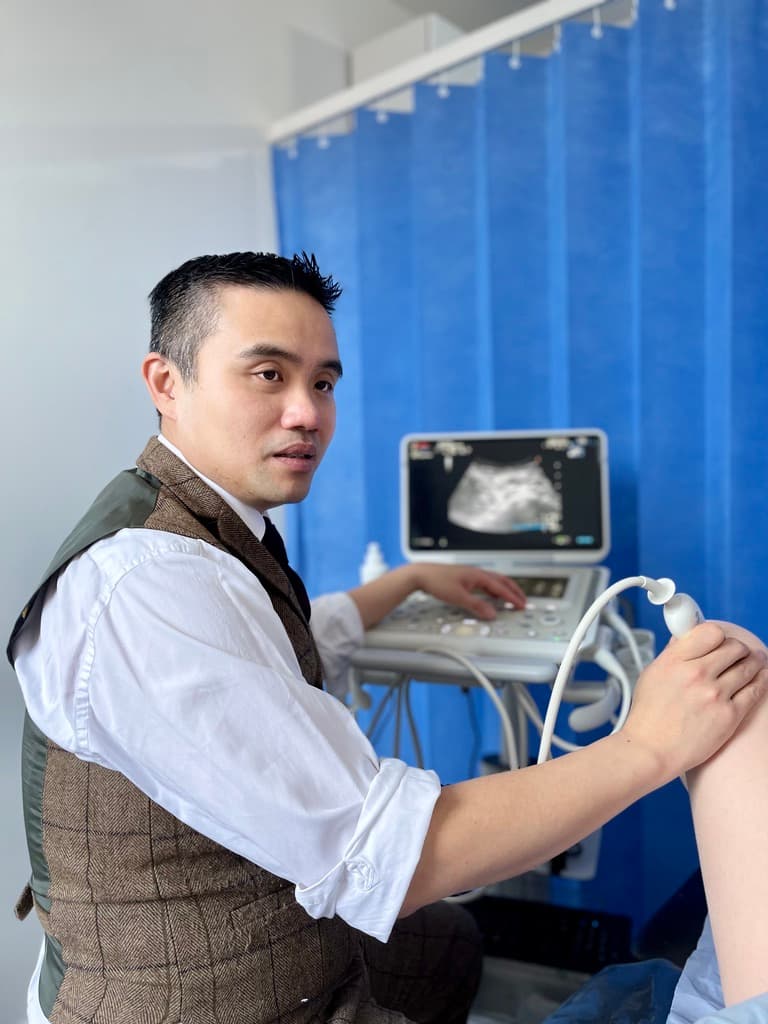
ChondroFiller injection training with Professor Lee explores how procedural planning follows from the assessment. Relevant discussion includes the intended target, anatomical orientation, image interpretation and the practical questions that arise when planning access.
Device preparation belongs within a planned clinical workflow. Discuss the questions that link the current product instructions to room preparation, team communication and the sequence of a treatment appointment.
Consistency in practice
Room & equipment
Prepare the setting and understand the device.
Team & patient
Clarify roles, clinical checks and communication.
Record & review
Connect documentation with accessible follow-up.
Professor Lee’s experience provides a basis for discussing the follow-up questions that matter in practice: how to explain the treatment pathway, how loading and rehabilitation are planned and how clinical progress is reviewed.
The clinical pathway
Assess
Symptoms, imaging and the whole joint
Choose
Treatment rationale and patient goals
Plan
Image guidance, preparation and delivery
Review
Aftercare, progress and outcomes
Clinicians need language that helps a patient understand the treatment rationale without turning a biological concept into a promise. Discuss the difference between a collagen scaffold, symptom improvement and a demonstrated structural outcome.
The patient conversation
Before you book
Find the course that fits your clinical role, experience and learning goals.
Discuss your training requirements →Orthopaedic surgeons, sports and exercise medicine physicians and other appropriately qualified clinicians involved in cartilage care and joint injections. Eligibility depends on professional scope, prior experience and the practical format. Include your specialty and current ultrasound/injection experience when enquiring.
Yes. The educational focus includes the non-surgical injection approach pioneered in Professor Lee’s practice, alongside patient selection, imaging and follow-up. The distinction from arthroscopic cartilage treatment is part of the discussion.
The focus is ChondroFiller-specific decision-making and injection planning. It is not presented as a complete foundation course in MSK ultrasound. Discuss your experience before booking so the team can advise whether this training is an appropriate next step.
Ask the team to confirm the practical format for the London session you are considering. Do not assume that a demonstration, supervised model practice, clinical observation or live-patient injecting is included until the arrangements are confirmed.
You can enquire about case-based teaching and bring the clinical questions you want to address. Ask how to prepare anonymised case material and imaging; do not send identifiable patient information through a general enquiry form.
The linked ChondroFiller treatment and evidence guides provide background for discussion. They complement, rather than replace, the current manufacturer instructions, clinical literature and training appropriate to your role.
The London programme is hosted through London Cartilage Clinic. Confirm the session venue, access arrangements and timetable before making travel plans. The I AM Regen Congress workshops linked from these pages are separate events with their own locations and booking arrangements.
Dates, fees, availability and the session format are confirmed directly by the LCC training team. Enquire with your preferred technique, specialty, experience and availability to discuss the next suitable session.
Ask what documentation and any accreditation apply to the London session you are booking. A certificate of attendance, an assessed competency award and manufacturer authorisation are different things. These pages do not promise CPD points or certification.
Orthopaedic surgeons, sports-medicine doctors and appropriately qualified clinicians developing their joint-preservation practice. Teaching connects patient selection, practical technique and follow-up, with space to discuss clinical questions.
The team will confirm the format, practical elements and prerequisites for each London session. Enquire with your specialty, experience and preferred technique.
Explore the wider education network and its separately organised Congress workshops. The linked I AM Regen events have their own venue, faculty, dates, fees and completion arrangements.
Contact the London Cartilage Clinic team about ChondroFiller training. Dates, availability, fees and the session format will be confirmed directly before you commit.
Contact the training team →This is a clinician education enquiry, not a patient treatment booking.